
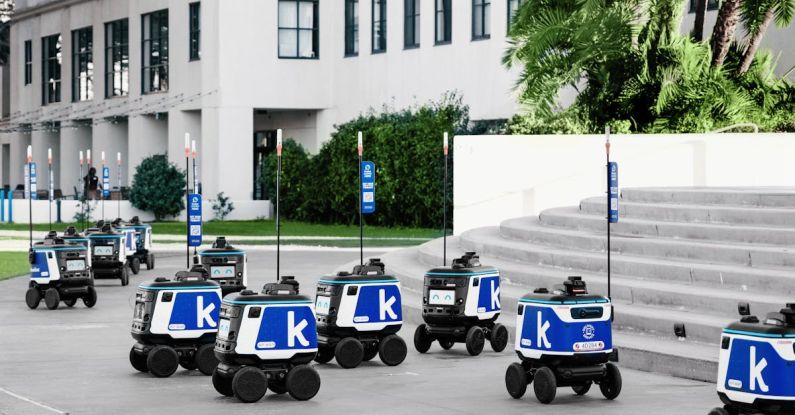
In the realm of robotics, swarm robots have emerged as a fascinating area of study that draws inspiration from the collective behaviors observed in nature, such as those seen in ant colonies, bird flocks, and fish schools. These robotic systems consist of multiple simple robots that work together in a coordinated manner to achieve complex tasks that would be challenging for a single robot to accomplish. By mimicking the principles of self-organization and decentralized control found in natural systems, swarm robots offer unique advantages in various applications, from search and rescue missions to environmental monitoring. Let’s delve into how swarm robots replicate the efficiency and adaptability of natural collective behaviors.
The Power of Decentralized Control
One of the key principles underlying the operation of swarm robots is decentralized control. In natural systems like ant colonies, decision-making is distributed among individual agents without the need for a central authority. Similarly, swarm robots operate based on local interactions and simple rules that guide their behavior in relation to neighboring robots. This decentralized approach enables swarm robots to exhibit emergent behaviors, where collective intelligence arises from the interactions of individual robots without requiring explicit coordination from a central controller.
Adaptive Behaviors Through Communication
Communication plays a vital role in enabling swarm robots to exhibit adaptive behaviors akin to those seen in nature. Through the exchange of information with nearby robots, swarm robots can adapt their actions based on the current environmental conditions and the status of their peers. This communication network allows swarm robots to exhibit behaviors such as flocking, where robots move together in a cohesive manner while avoiding collisions with each other. By constantly sharing information and adjusting their movements in response to their surroundings, swarm robots can navigate complex environments more effectively and achieve collective goals efficiently.
Efficient Task Allocation
Another striking feature of swarm robots is their ability to allocate tasks among themselves in a decentralized manner, much like the division of labor observed in social insect colonies. By dynamically assigning roles based on the capabilities and proximity of individual robots to the task at hand, swarm robots can optimize resource utilization and task completion times. This flexible task allocation strategy enables swarm robots to adapt to changing conditions on the fly, ensuring robustness and resilience in the face of uncertainties or failures in individual robots.
Exploration and Search Capabilities
Swarm robots excel in tasks that require exploration and search over large areas, thanks to their ability to spread out, gather information, and collaborate to cover the entire space efficiently. Inspired by the foraging behaviors of social insects, swarm robots can collectively explore unknown environments, locate targets, and navigate obstacles by leveraging the power of swarm intelligence. By leveraging the diverse perspectives and sensory inputs of multiple robots, swarm systems can achieve a comprehensive understanding of their surroundings and make informed decisions to accomplish their objectives.
Promising Applications of Swarm Robotics
The unique capabilities of swarm robots have opened up a wide range of applications across various domains, including disaster response, surveillance, agriculture, and space exploration. In disaster scenarios, swarm robots can be deployed to search for survivors in hazardous environments or assess the extent of damage in inaccessible areas. In agricultural settings, swarm robots can work together to monitor crop health, apply treatments, or perform tasks like pollination more efficiently than traditional methods. In space exploration missions, swarm robots could be used to explore planetary surfaces, gather samples, or construct habitats in challenging extraterrestrial environments.
In Conclusion: Unleashing the Potential of Swarm Robotics
Swarm robots represent a paradigm shift in robotics, harnessing the power of collective intelligence and decentralized control to achieve tasks that were previously deemed too complex or impractical for individual robots. By emulating the collective behaviors observed in nature, swarm robots offer a versatile and scalable approach to solving real-world challenges across various domains. As researchers continue to explore the potential of swarm robotics and enhance the capabilities of these systems, we can expect to see more innovative applications that leverage the efficiency, adaptability, and robustness of swarm intelligence in shaping the future of robotics.